

Only an all powerful being is able to solve the problem of evil. It is our duty as His creation to belief He can asnopposed to believe He can’t.
“The just shall live by faith” Habbakuk 2:4
But so do the unjust just not in God.
Only one of the above two faiths actually honors the Creator and leads unto salvation.
Here is how Arnobius answers the problem of evil:
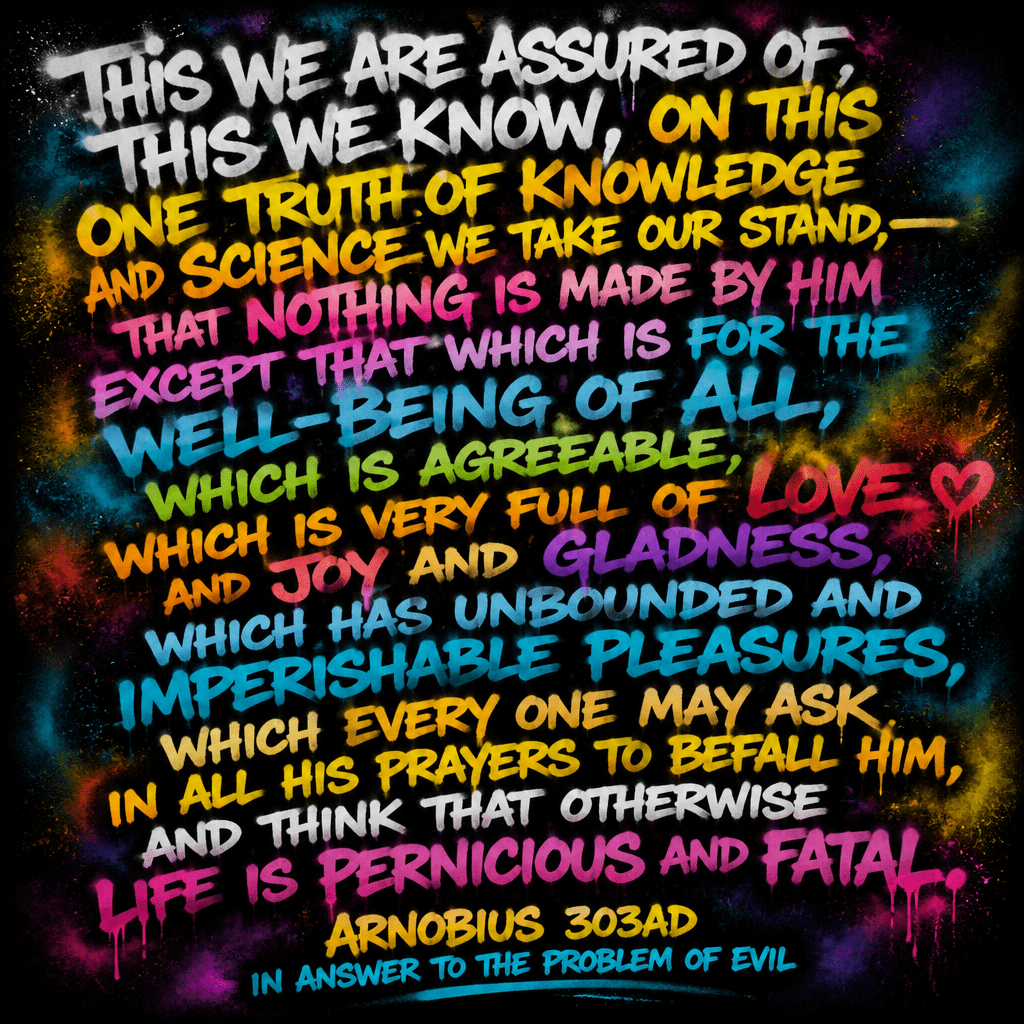
But when, overcome, we agree that there are these things, and expressly allow that all human affairs are full of them, they will next ask, Why, then, the Almighty God does not take away these evils, but suffers them to exist and to go on without ceasing through all the ages? If we have learned of God the Supreme Ruler, and have resolved not to wander in a maze of impious and mad conjectures, we must answer that we do not know these things, and have never sought and striven to know things which could be grasped by no powers which we have, and that we, even thinking it preferable, rather remain in ignorance and want of knowledge than say that without God nothing is made, so that it should be understood that by His will He is at once both the source of evil and the occasion of countless miseries. Whence then, you will say, are all these evils? From the elements, say the wise, and from their dissimilarity; but how it is possible that things which have not feeling and judgment should be held to be wicked or criminal; or that he should not rather be wicked and criminal, who, to bring about some result, took what was afterwards to become very bad and hurtful, —is for them to consider, who make the assertion. What, then, do we say? whence? There is no necessity that we should answer, for whether we are able to say whence evil springs, or our power fails us, and we are unable, in either case it is a small matter in our opinion; nor do we hold it of much importance either to know or to be ignorant of it, being content to have laid down but one thing,—that nothing proceeds from God Supreme which is hurtful and pernicious. This we are assured of, this we know, on this one truth of knowledge and science we take our stand,—that nothing is made by Him except that which is for the well-being of all, which is agreeable, which is very full of love and joy and gladness, which has unbounded and imperishable pleasures, which every one may ask in all his prayers to befall him, and think that otherwise life is pernicious and fatal.
Arnobius. 1886. “The Seven Books of Arnobius against the Heathen (Adversus Gentes).” In Fathers of the Third Century: Gregory Thaumaturgus, Dionysius the Great, Julius Africanus, Anatolius and Minor Writers, Methodius, Arnobius, edited by Alexander Roberts, James Donaldson, and A. Cleveland Coxe, translated by Hamilton Bryce and Hugh Campbell, 6:454–55. The Ante-Nicene Fathers. Buffalo, NY: Christian Literature Company.
Here is an AI break down of the above paragraph which can be helpful but I put what I felt was a better explanation of the last sentence next to AI’s:
Arnobius Made Understandable (Modern Explanation)Arnobius is responding to the question:
“If evil exists everywhere, why doesn’t God just remove it?”
Here is his argument in clear, modern language:People admit that evil exists in the world and that human life is full of it. Once we agree to that, the next question people ask is:
“So why doesn’t God get rid of all this evil? Why does He allow it to continue through every age?”Arnobius says:
If we truly believe in the Supreme God and refuse to wander into wild, irreverent guesses, then the honest answer is: we don’t know.
We have never claimed to know things that are beyond human ability to understand. And we actually think it is better to admit ignorance than to say something that would imply God is the source of evil or the cause of human misery.
People then ask:
“Okay, then where does evil come from?”Some philosophers say evil comes from the basic elements of the world and from their differences. But Arnobius challenges this:
How can things that have no feeling or judgment—like physical elements—be considered wicked or guilty?
And if someone insists that the elements cause evil, then they must explain how the one who created those elements is not responsible for making something that turned out harmful.
So what do we say? Where does evil come from?Arnobius answers:
We don’t think it’s necessary to give an answer. Whether we can explain the origin of evil or not, it doesn’t matter much to us. What does matter is one truth:👉 Nothing harmful or destructive comes from the Supreme God.
This is the one thing we confidently know:
God creates only what is good, loving, joyful, and beneficial for all. Everything He makes is full of goodness and meant for our well‑being. Anything that is truly good—anything worth praying for—comes from Him.
Life becomes destructive and fatal only when we imagine that God produces evil, which Arnobius says is impossible.
Me commenting at this point forward: I would just like to add a bit of twist to his argument here which may or may not be the spirit of his argument but that: Life becomes destructive and fatal if we imagine that not only that God produces evil but is not good enough and powerful enough to solve the problem of evil.
In the end, we don’t need to know how God will solve this problem. We only need to believe that He can. If we are already granting that God is all‑powerful—and that He created the world in which this problem exists—then it logically follows that He is able to resolve it. That’s the simple point I’m making, though I could be mistaken. God bless…
Either you believe He can which seems consistent with an allpoweful being or you believe He can’t which seems to be inconsistent with an allpowerful being and so to land on believing God seems to be the logical position to hold but I could be wrong. God bless…
Just thinking out loud as this writing spark some interesting internal thoughts to at least myself…. 😆

