

I think Plato may have been somewhat impressed with the success of Jesus!
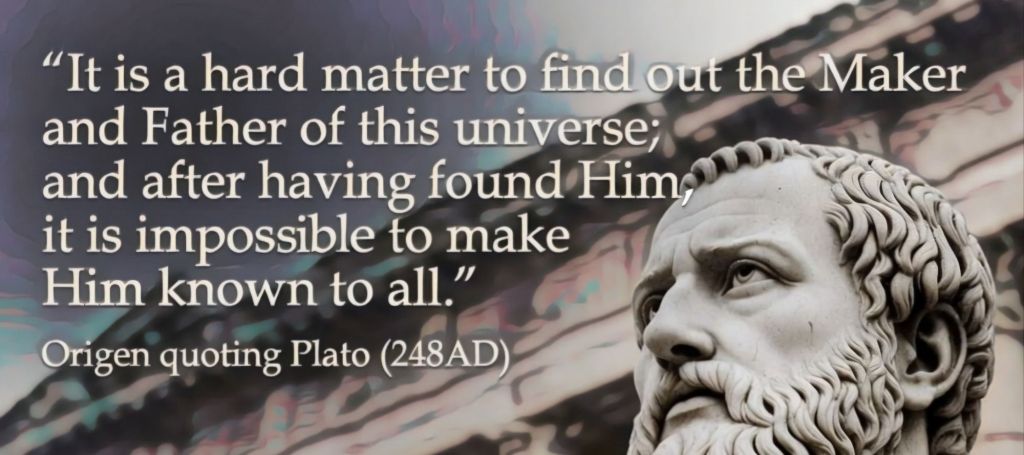
These words of Plato are noble and admirable; but see if Scripture does not give us an example of a regard for mankind still greater in God the Word, who was “in the beginning with God,” and “who was made flesh,” in order that He might reveal to all men truths which, according to Plato, it would be impossible to make known to all men, even after he had found them himself. Plato may say that “it is a hard thing to find out the Creator and Father of this universe;” by which language he implies that it is not wholly beyond the power of human nature to attain to such a knowledge as is either worthy of God, or if not, is far beyond that which is commonly attained (although if it were true that Plato or any other of the Greeks had found God. they would never have given homage and worship, or ascribed the name of God, to any other than to Him: they would have abandoned all others, and would not have associated with this great God objects which can have nothing in common with Him). For ourselves, we maintain that human nature is in no way able to seek after God, or to attain a clear knowledge of Him without the help of Him whom it seeks.
Origen. 1885. “Origen against Celsus.” In Fathers of the Third Century: Tertullian, Part Fourth; Minucius Felix; Commodian; Origen, Parts First and Second, edited by Alexander Roberts, James Donaldson, and A. Cleveland Coxe, translated by Frederick Crombie, 4:628. The Ante-Nicene Fathers. Buffalo, NY: Christian Literature Company.
“And this is eternal life, that they may know You, the only true God, and Jesus Christ whom You have sent.” – Jesus John 17:3
“And he that seeth me seeth him that sent me.” – Jesus John 12:45
Trust Him!
 1love1god.com